
By now, many parents have started thinking more intentionally about career conversations. But here’s what I hear often: “We try to talk, but the conversation doesn’t go anywhere.”
The child says very little.
Or gives vague answers.
Or simply avoids the discussion altogether.
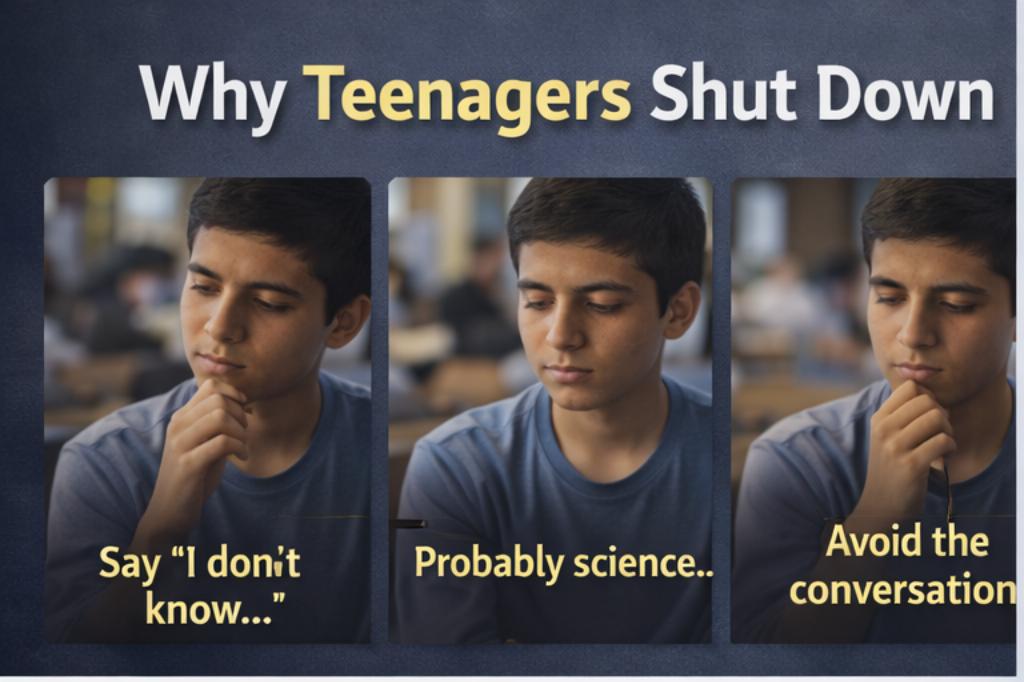
This is where most parents feel stuck, and working with families over the years, I’ve noticed something simple but important: It’s not that teenagers don’t want to talk; it’s that how we ask often determines how they respond.
Where conversations usually go wrong. Let’s start with intent.
Most parents ask questions like:
“What do you want to become?”
“Have you decided your stream?”
“What are your plans after school?”
These seem reasonable.
But to a teenager, they often feel like final-answer questions.
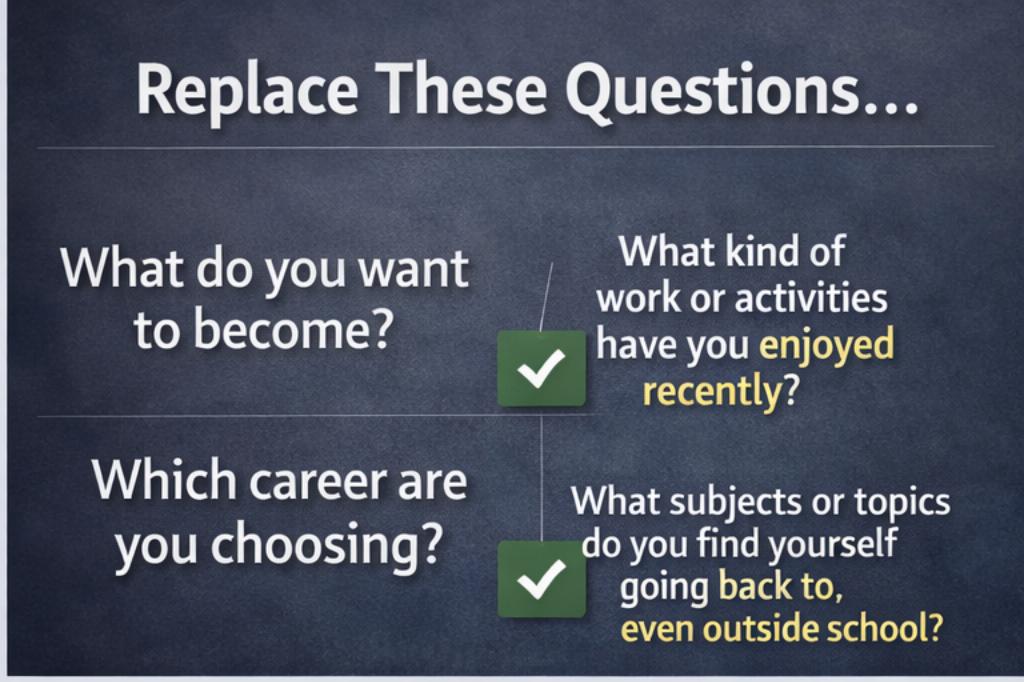
And when they don’t have answers yet, they do one of three things:
- Say “I don’t know”
- Give a safe, expected answer
- Avoid the conversation
None of these lead to clarity.
What teenagers actually need:
Teenagers are still forming their thoughts.
They are exploring, testing, and changing their minds.
So instead of questions that demand decisions, they respond better to questions that invite reflection.
For example:
Instead of
“What do you want to do?”
Try
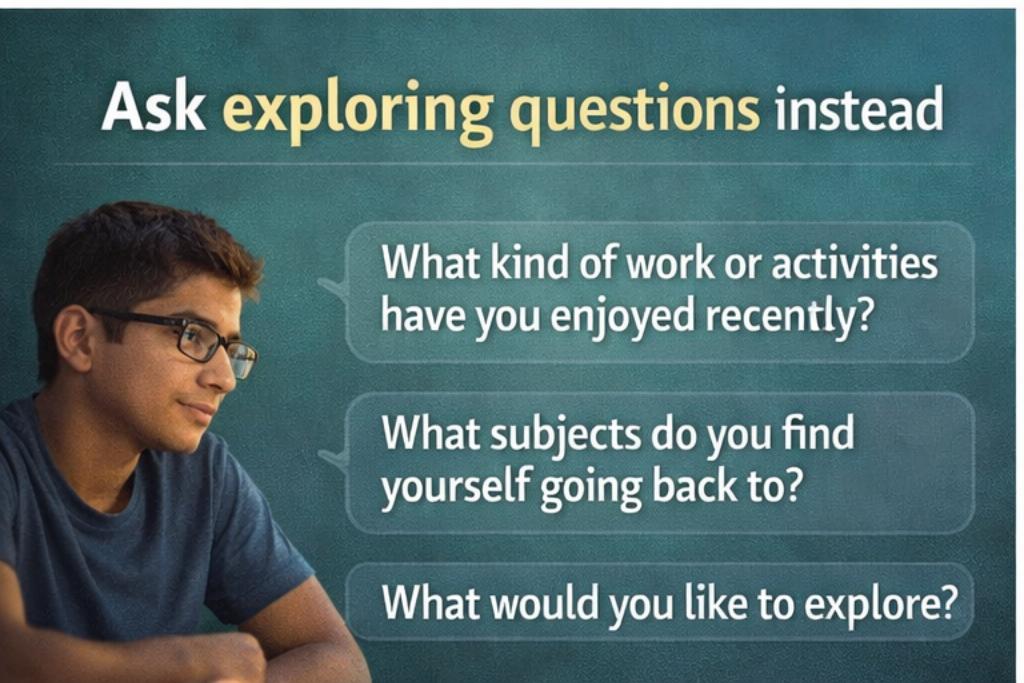
“What kind of work or activities have you enjoyed recently?”
Instead of
“Which career are you choosing?”
Try
“What subjects or topics do you find yourself going back to, even outside school?”
Instead of
“What’s your plan?”
Try
“What would you like to explore more this year?”
These questions do something important.
They remove pressure and create space.
The tone matters more than the question
Even the right question can fail if the tone feels evaluative.
Teenagers are quick to sense when a conversation is leading somewhere.
If they feel they are being judged, compared, or guided toward a “correct” answer, they shut down.
On the other hand, when the conversation feels open-ended and genuinely curious, they engage more honestly.
Timing matters too
Many career discussions happen:
- After exam results
- During stressful periods
- When parents are already concerned
That makes the conversation heavier from the start.
Better conversations usually happen in neutral moments:
- During a drive
- Over a casual meal
- While discussing something they recently did
Low-pressure moments lead to better responses.

One small shift that changes everything
Move from
“I need an answer”
to
“I want to understand how you’re thinking.”
This shift alone changes the entire dynamic.
When parents approach conversations this way, something interesting happens.
Teenagers begin to speak more.
Not immediately. Not perfectly.
But gradually, and more honestly.
And that is where real clarity begins.
In the next article, we’ll look at why these conversations sometimes turn into tension or conflict at home, and how to avoid that.
I’d value hearing your experience.
Which kind of response do you usually get when you ask your child about their future?
At MindScan, we work with students & handhold them through the entire process of university research and application. If you’re thinking about applying to the best universities in the world, we’ll be happy to partner you on this journey. Connect with us today !
