
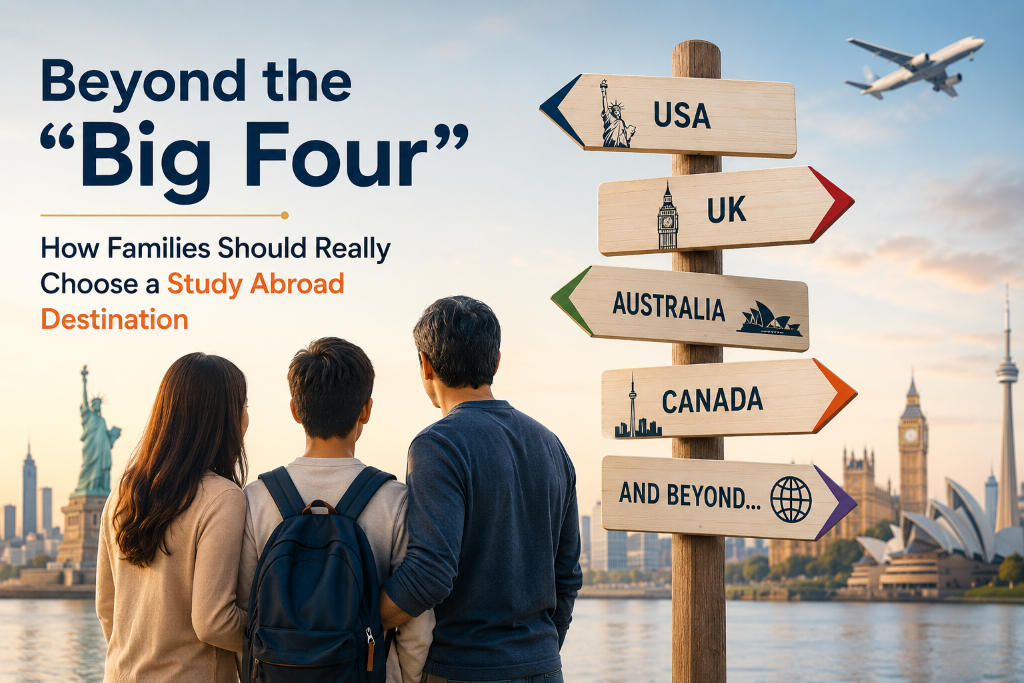
For years, when Indian students spoke about studying abroad, the conversation usually revolved around four countries: the USA, UK, Australia and Canada. And honestly, that made sense. These countries built strong reputations over decades. They offered globally recognised universities, excellent research opportunities and large international student communities.
But the landscape is changing.
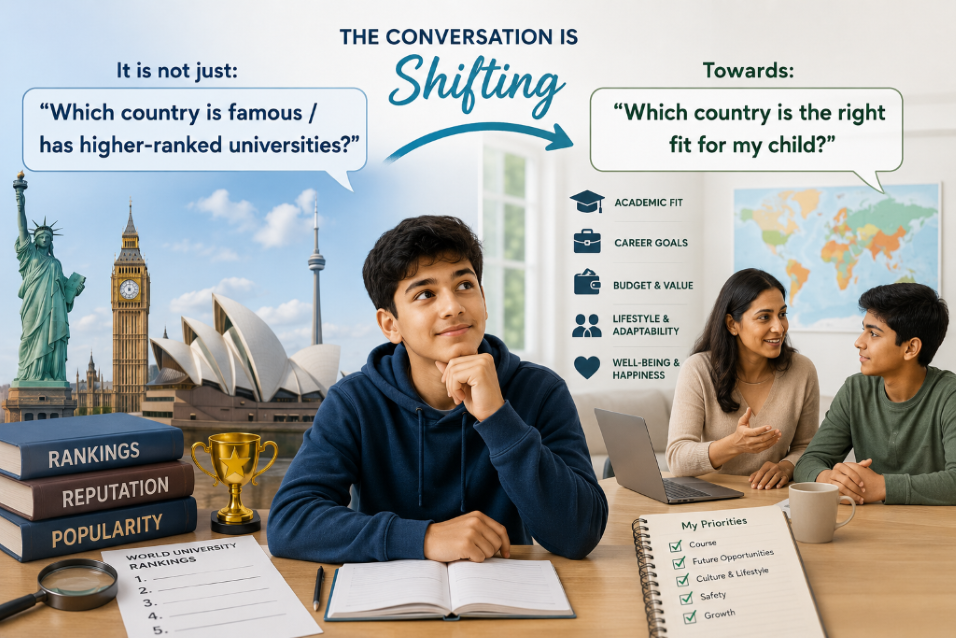
Today’s students are far more aware of global opportunities than earlier generations. A teenager in Class 11 today is likely to know about universities in Ireland, Germany, Singapore or the Netherlands just as easily as they know about universities in London or Toronto. Families are also asking sharper questions now. It is not just: “Which country is famous / has higher-ranked universities?” The conversation is shifting towards: “Which country is the right fit for my child?”
That shift is important, because choosing a study destination is no longer only about rankings or prestige. It is a decision that affects academics, finances, career opportunities, emotional well-being and long-term growth. And increasingly, families are realising that there is no single “best” country for everyone.
It starts with the student, not the Country: One of the most common mistakes students make is choosing a destination before understanding what they actually want from their future. A student interested in AI research may naturally look at the US. Someone interested in automotive engineering may explore Germany, while another may prioritise affordability and work opportunities or even a shorter PG programme.
The point is simple: different countries are strong in different areas.
Sometimes students get influenced by social media, relatives or where their friends are applying. But a country that works brilliantly for one student may feel completely wrong for another. The question to ask yourself is: What kind of learner, person and professional am I likely to become? Once that becomes clearer, country selection becomes more focussed.
Cost Matters. But so does Return on Investment. Families today are far more financially aware than before, and rightly so. Studying abroad is a major investment, and the tuition fees are only one part of the picture. Accommodation, insurance, transport, food, currency exchange rates and travel costs all add up very quickly. This is why comparing countries only on tuition fees can sometimes be misleading.
Germany, for example, attracts many students because public universities may have very low tuition fees. But students may need German language skills to access wider internship and job opportunities later. Also the requirement of a blocked account means tying up money before you even leave India !
The US often appears expensive initially, but in certain industries the earning potential after graduation can also be significantly higher. Meanwhile, countries like Ireland and the Netherlands are becoming increasingly attractive because they combine relatively smaller student populations with growing opportunities in sectors like technology, business analytics and pharmaceuticals.
Families should therefore look beyond the question: How much will we spend? and think about : What opportunities is this education likely to create over the next 10 years? That creates a much healthier perspective.
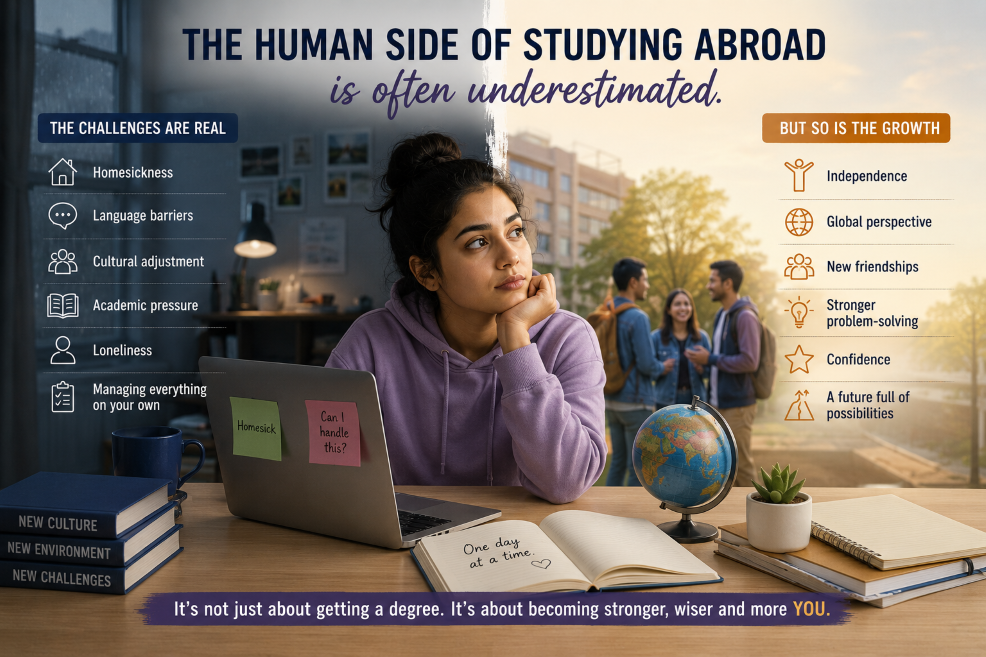
The Human side of studying abroad is often underestimated. Studying abroad sounds exciting, and it is. But it also involves a huge emotional adjustment, especially for teenagers leaving home for the first time. A student is suddenly dealing with:
- a new culture
- different teaching styles
- unfamiliar food
- weather changes
- homesickness
- independence
- loneliness
Research across multiple countries has consistently shown that international students commonly face social, cultural and emotional adjustment challenges, especially during the first year abroad. In fact, a large review studying international student experiences across 21 years found that sociocultural and academic adjustment challenges remained among the most common concerns globally. Language barriers and difficulty integrating socially were repeatedly identified as major stress factors.
This is why “fit” matters so much.
Some students thrive in fast-moving, highly independent environments. Others perform far better in smaller, structured and more supportive settings. Parents often focus heavily on rankings, but students themselves should honestly think about questions like: “Can I adapt to a completely new environment?” “How comfortable am I being independent?” “Will I enjoy this lifestyle for 3 or 4 years?”
These questions matter far more than most people realise.
New destinations are growing fast – maybe too fast ! The “Big Four” still dominate international education, but newer destinations are definitely becoming more visible. Countries like Ireland, Germany, France, Singapore and the Netherlands are attracting students because they offer a combination of quality education, specialised industries and, in some cases, lower overall costs. At the same time, families should avoid choosing a country simply because it is currently “trending.” A lower-cost degree only makes sense if it also leads to meaningful career opportunities later. Thus, it is important to consider factors like:
- industry connections
- internship opportunities
- employer reputation
- graduate outcomes
- language expectations
- long-term career flexibility
and not just focusing on admission ease or lower tuition.
An important point for families to keep in mind is that Visa regulations, post-study work rights and immigration policies across countries continue to evolve regularly. As education consultants, we always encourage families to stay updated on these developments and also consult authorised immigration or legal experts wherever necessary, since policies can change quite quickly. At the same time, students should avoid selecting a country only because they assume permanent residency or settlement will automatically happen later.
The stronger approach is to first focus on:
- quality education
- employability
- skill development
- long-term career growth
Those factors usually create better opportunities in the long run, regardless of policy changes.
The conversation around studying abroad has matured and new perspectives have become relevant. A few years ago, families often chased the most popular destination. Now Parents are asking: “Will my child actually enjoy living there?”, “Can they adapt emotionally?” , “Will this environment help them grow as a person?”
And honestly, those are the right questions to ask. Because studying abroad is not only about earning a degree, but also about helping a young person build independence, confidence, perspective and a future they genuinely feel excited about. And that journey looks different for every student.

At MindScan, we work with students & handhold them through the entire process of university research and application. If you’re thinking about applying to the best universities in the world, we’ll be happy to partner you on this journey. Connect with us today !
