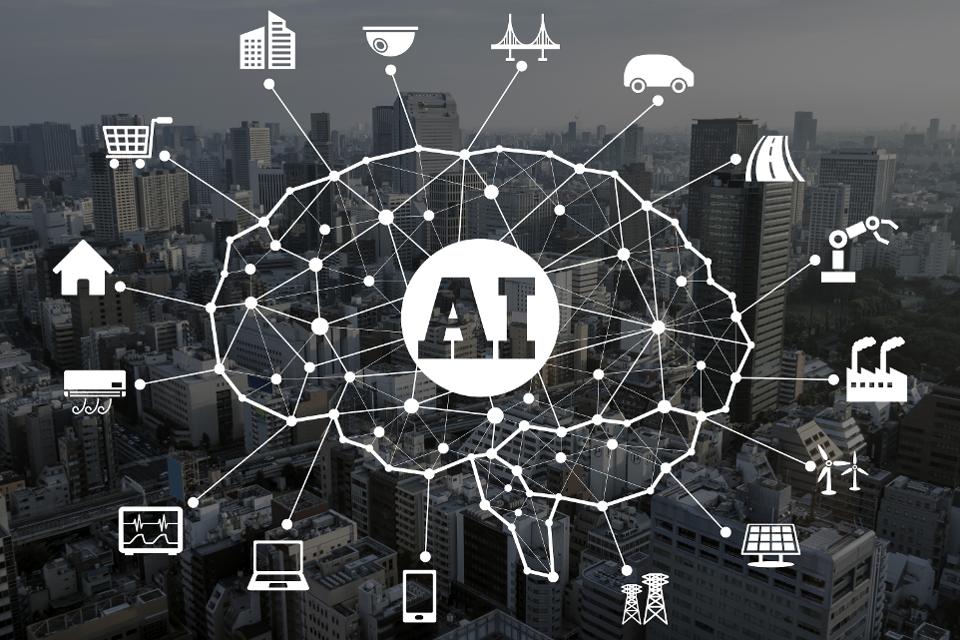
AI is changing the world. But here’s why your child shouldn’t be worried.
“Sir, just tell me one thing. Which career is safe from AI?”. A parent asked me this question recently during a counselling session. It wasn’t the first time I’d heard it, and I’m certain it won’t be the last. Almost every week, parents ask me some version of the same question.
“Will AI replace jobs?”
“Should my child still study Computer Science?”
“Is Engineering still a good option?”
I understand where these questions come from. Every few days there’s another headline predicting that Artificial Intelligence will replace programmers, lawyers, accountants, writers or even doctors. It’s easy to feel that whatever career your teenager chooses today may not even exist by the time they graduate.
For the first time in my career as a counsellor, I find myself saying something I never imagined I would- I cannot tell you exactly what the job market will look like twenty years from now.

But you know what, that doesn’t worry me. Because I don’t think the most important question is, “What should my child study?”
The better question is, “How can I prepare my child for a future that is changing so quickly?” Once we start looking at it that way, the conversation becomes much more meaningful. AI can generate answers. It cannot replace understanding.
Let’s take a simple example: imagine your child has been asked to write an essay. Instead of spending an hour researching, thinking and writing, they ask ChatGPT to do it in thirty seconds. The assignment gets submitted. The marks might even be excellent.
But has any real learning happened? Probably not.
When students write an essay themselves, they aren’t simply producing words. They’re organising their thoughts, connecting ideas, questioning assumptions and discovering gaps in their own understanding. That’s where the learning happens.
The essay is just the final product. The real value lies in the thinking that happens before the last full stop. The same principle applies whether a student is solving a maths problem, writing computer code, analysing a business case or preparing for a debate. AI can absolutely help. It can explain concepts, suggest ideas and provide useful feedback. Used wisely, it’s an extraordinary learning companion. But it should support thinking, not replace it.
When the internet became mainstream, many people feared it would eliminate jobs. Instead, it created careers that barely existed thirty years ago. App developers, digital marketers, cybersecurity experts, UX designers and data scientists are just a few examples. AI will almost certainly create opportunities we can’t even imagine today.
Yes, some jobs will disappear, but many more will change, and entirely new careers will emerge.
The challenge is that nobody knows exactly what those careers will look like. That’s why choosing a course simply because it appears “safe” today isn’t the best strategy. A much better approach is to prepare students for change itself.
Degrees open doors. Skills build careers. Partway through that same counselling session, the parent asked another question. “So what should my son study?” I smiled and replied, “I think we’re asking the wrong question.” A degree is important. It provides knowledge, structure and opportunities. But employers don’t hire someone simply because of the title printed on a certificate.
They hire people who can solve problems.
Whether your child studies engineering, psychology, economics, commerce, design or medicine, they will need to analyse information, communicate clearly, work with others and make sound decisions. Those abilities don’t become less important because AI exists. If anything, they become even more valuable. Think about it this way: AI can generate hundreds of answers within seconds. The person who succeeds will be the one who knows which answer makes sense.
So, should everyone study Computer Science? Computer Science will continue to be an excellent choice for many students. But not because writing code guarantees lifelong job security. AI is already helping software engineers write code faster than ever before. The real value of Computer Science lies in learning computational thinking, understanding systems and solving complex problems. The same principle applies across every profession.
a. A doctor may use AI to interpret medical scans, but patients will still depend on the doctor’s judgement, empathy and ability to make difficult decisions.
b. A lawyer might use AI to review thousands of pages of documents in minutes. But building a legal strategy and representing a client’s interests still requires human judgement.
c. A designer can generate fifty ideas using AI in seconds. Deciding which one truly solves the client’s problem remains a human responsibility.
The future isn’t about humans competing with AI. It’s about humans who know how to use AI wisely.
What can parents do today? Fortunately, preparing children for an AI-enabled future doesn’t require expensive courses or the latest technology. It starts with everyday habits. Encourage your child to read complete books instead of relying only on summaries. Let them wrestle with difficult problems before turning to AI for help. Ask them why they believe something, not just what they believe. Give them opportunities to create, build, research and experiment. And perhaps most importantly, let them make mistakes. One of AI’s greatest strengths is that it makes everything look effortless.
Real learning isn’t effortless. Confidence comes from struggling with something, getting it wrong, trying again and finally figuring it out. That’s how judgement develops. That’s how resilience is built. No technology can shortcut that process.
A final thought
As our conversation came to an end, the parent smiled and asked me one last time. “So Mandeep, which career is safe from AI?”
My answer was exactly the same.
“I don’t know. And honestly, I don’t think anyone does. But I do know how to prepare your son for that future.”
- Help him become curious.
- Teach him to think independently.
- Encourage him to communicate clearly, solve meaningful problems and keep learning throughout his life.
Careers will change. Industries will evolve. New technologies will continue to surprise us. The students who thrive won’t necessarily be the ones who picked the “right” degree at seventeen. They’ll be the ones who never stop learning. Those qualities have always mattered. AI has simply reminded us why they matter even more.
At MindScan, we work with students & handhold them through the entire process of university research and application. If you’re thinking about applying to the best universities in the world, we’ll be happy to partner you on this journey. Connect with us today !